CSSF: Built on trust, driven by the front line

Our feature explores the CSSF — built on trust, driven by the front line — and the work still ahead.

Why the CSSF was established

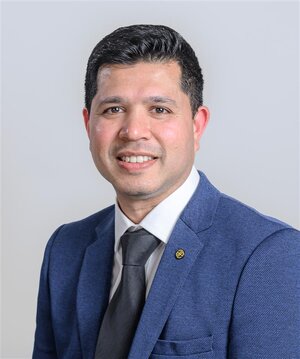
When a small group of container shipping companies gathered in Marseille in 2014 to sign what would become the CSSF's founding convention, the ambition was deliberately straightforward. "In the beginning we were just a few companies, and all with the same goal: to reduce incidents and increase safety culture globally," recalls Olivier Texier of CMA CGM, one of the forum's co-founders. “We decided it would be interesting to share security and safety topics outside of commercial strategy. The target was simply to promote and increase the general safety culture on board our vessels, to avoid injuries and fatalities, and to improve equipment and develop more modern approaches.”

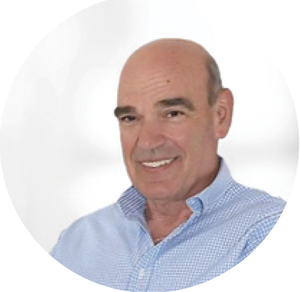
The catalyst was a gap in the industry's architecture. “Container shipping had no equivalent of the safety forums long established in tanker or bulk shipping, so we were a little isolated” explains fellow co-founder John Drakogiannopoulos of Costamare Shipping. "The idea of CSSF was to start creating some benchmarking — how are we doing, what are the main points — but also the networking. Just being able to call someone you know." From an initial five companies, the forum has grown to currently 32 Ordinary Members representing over 50% of worldwide container vessel capacity.

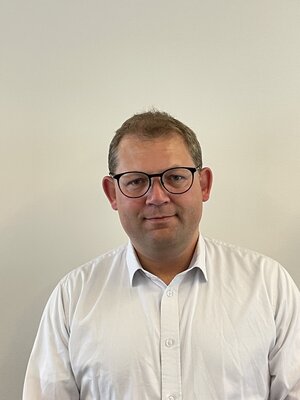
For Søren Thuen of Maersk, and first chairman of the forum's management board, that founding instinct has only been validated by time. "CSSF was very much focused in the beginning on work-related safety," he says. “Over time the risk picture has evolved. The ability to distinguish the relentless chase for zero Lost Time Injury (LTI) from the things that actually matter is one of the developments we have gone through. As an example, most people in the industry would recognise the difference between a sprained ankle and the risk of working under suspended heavy loads, with high-energy steam or electrical systems – and that is where you want to put your effort. We are now also moving from just personal safety to talk about asset safety, because we see a clear correlation.”


A decade of progress — and new pressures

As reported by leading insurers and maritime media, the headline story of the past decade for the container shipping sector is one of genuine improvement. Total vessel losses have fallen to a record low of 27 in 2024, down from 105 a decade ago — a 75% decline attributed to better safety measures, improved ship design and stricter regulation. Collisions, groundings and related casualties have decreased significantly, driven by advances in navigation systems and data-driven risk management.

But beneath that headline the picture is more complex. Machinery damage and failure now accounts for 60% of all incidents, up from 38% a decade ago, while insurance claims have risen 20% in value. The most significant emerging threat is fire, driven by the rapid growth of lithium-ion battery shipments — 250 reported fire incidents across all vessel types in 2024 alone, a decade high. Misdeclared cargo is identified as a contributing factor in roughly 25% of serious container incidents (CINS).

Søren draws directly on operational experience to illustrate the scale of what is at stake. "We had a severe fire in 2018 on one of our 14,000-TEU vessels. Five fatalities, many of the crew injured or impacted for life just by the experience. The vessel came very close to a total loss. Several CSSF members had similar experiences." 

The numbers from Swapnodeep (Swapan) Mondal of Anglo-Eastern Ship Management, and the second chairman of the forum's management board, reinforce the picture. “When it concerns the CSSF, we have been around now for 12 years, and the safety performance of this group has improved dramatically. The Port State Control (PSC) performance on detentions, navigation incidents and collisions have all improved, but those are lagging indicators. They reflect what we were already doing. More recent numbers, however, are showing a mixed story with, for example, fire frequency increasing and PSC inspection quality indicators weakening. We are committed to addressing these issues and mitigating safety threats going forward.”


How the forum model works

The CSSF is today a recognised international industry association with 32 Ordinary Members collaborating by measuring, reporting and benchmarking safety performance, sharing best practices and working with key stakeholders on practical solutions. The forum also offers Associated Membership to classification societies, NGOs, insurers, universities and maritime research institutes and safety solution providers, who contribute in an advisory capacity. All activities operate in strict compliance with anti-trust and competition laws.

The model is deliberately informal and provides a designated forum for members to discuss issues that matter. "What I would like to maintain is staying true to what the founders intended — a safe space where people share openly and candidly, coming straight from the front line," says Søren. “We do not aim for a larger secretariat or official governmental status. It is something quite different and we are focused on maintaining a trusted network to exchange operational experience and best practices." 
Two concrete examples illustrate how that translates to outcomes. The HydroPen, invented by two seafarers and commercialised by Viking, allows a crew member to mount a cutting-drill device on a container and drench or flood it from a safe distance, entirely out of harm's reach. "We have had fires where we managed to keep them at a low level, they do not even appear in our main statistics," says Søren. Anti-snap-back mooring ropes, developed with Wilhelmsen, tell a similar story: a centre-line arrester prevents the whiplash that has caused fatalities across the industry. "We are still breaking mooring ropes — we are just not hurting people."

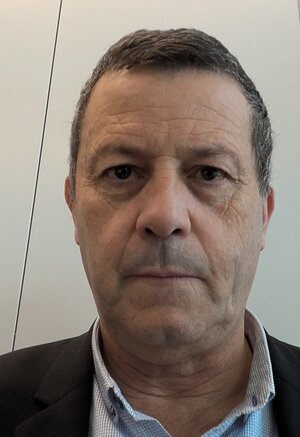
John captures the wider principle behind this knowledge flow. "Transparency is the most important thing. People are often afraid to report near misses because they think they will be blamed. In our company, we have a no-blame policy. Everything that happens gets reported to me, and I do not blame the person reporting it. The focus is on learning, not fault-finding. If your crew are afraid to speak, you cannot effectively minimise risk. Behind every fatal accident there are dozens – if not hundreds – of near misses and warning signs that were never reported. These unreported events are often where the real lessons lie. Creating a culture where people feel safe to report mistakes, concerns, and near misses is essential for improving safety. Operators who embrace that culture of openness and transparency would be a valuable addition to the CSSF community."


What the next decade requires

Focused discussions and shared insights on safety matters are of great interest and value to the CSSF community, and even more so as the industry faces increasing scrutiny and a new wave of risks” says Runa A. Skarbø, head of the CSSF Secretariat. That wave is already visible in the data.

Indeed, the decade ahead is likely to bring a convergence of familiar and genuinely new pressures. Lithium-ion battery demand is projected to rise sharply through 2030, meaning fire risk will intensify. Conventional firefighting struggles against lithium-ion chemistry, which generates its own oxygen. Cargo misdeclaration — still largely unresolved — demands tougher enforcement and a shift to standardised digital cargo declarations. Geopolitical instability is redrawing trade routes. And while new fuels such as ammonia and methanol are well-understood substances that have been carried at sea for decades, their adoption as bunker fuels is new territory: the operational handling, bunkering logistics and supporting infrastructure are still maturing, and crews, ports and shore-side teams are building that operational experience now.

Swapan frames the challenge of new technology directly. "Whether it is new fuels or new technology, the training of people on board and ashore is limited. The typical shipping career is: you sail 10 to 15 years on board, then move ashore and give guidance leveraging your experience. But now the problems developing are something we have not experienced. How do we give guidance back? This is a huge challenge for the industry." Søren adds: "History tells us that our ability to keep identifying what the next risks are is a muscle we need to flex continuously.”

There is also growing recognition that crew wellbeing is inseparable from safety performance. "We believe in the strong correlation between traditional physical safety and the wider wellbeing of crew," says Swapan and adds, “Safety, sustainability and crew welfare are evolving, and an increasing number of operators – including CSSF members – are putting crew welfare at the forefront, sharing data and feedback to drive sustained, meaningful outcomes on board. At its heart, this work is about making every journey safe, every decision sustainable, and ensuring every seafarer returns home.”
 

Growing influence and a new member

As CSSF's membership has grown, so has its institutional weight. "We are more credible today than twelve years ago because our numbers have grown," says Olivier Texier. "The weight is very different if one company makes a case alone compared to all of CSSF going together. CSSF is now more impactful.” 

The recent joining of Evergreen Marine Corp signals the direction of travel. Y.S. Hwang, Head of Operations at Evergreen, explains the decision: “When attending the CSSF Members Meeting in Hong Kong in 2025 as an observer, I was impressed by the openness of the discussions and the practical focus on real operational experience. Some case studies demonstrated how preparedness, training and transparent sharing of experience can make a critical difference. As an example, modern container cargo fires represent a serious and growing safety risk for all container carriers, and addressing this challenge requires collective awareness and joint action across the industry.

For Søren, Evergreen's arrival reflects exactly what the forum is for. “It is always encouraging to see leading liner companies choosing to engage with the forum and contribute actively to collective safety efforts. Improving container ship safety requires trust, transparency and a willingness to learn from real operational experience.

What is unique is that mix around the table between fully vertically integrated liner operators and pure ship managers” adds Søren and concludes, “It brings different views to the table and by embracing the diverse perspectives and experiences we create a huge value. And what I really like is when someone comes over and says: we tried this on board our vessel and it actually works. We need to give visibility to those success stories.

To top

Twelve years after its founding, the Container Ship Safety Forum’s members account for more than half the world's container fleet capacity.  What has changed in container ship safety over that period, where have the gaps proved hardest to close, and what does the next decade demand? The forum’s Secretariat reflects.

Container shipping has never been safer by most traditional measures, yet the risk landscape has rarely felt more complex. Ships are bigger, cargo is more varied and trade routes are increasingly disrupted. Against this backdrop, the Container Ship Safety Forum (CSSF) has spent more than a decade building something rare in a competitive sector: a trusted space where operators share knowledge, benchmark safety performance and confront hard operational truths. As the forum enters its second decade, its members are clear on both the value it delivers and the work still ahead.