Fire risks, navigation security and geopolitical risks on CSSF agenda

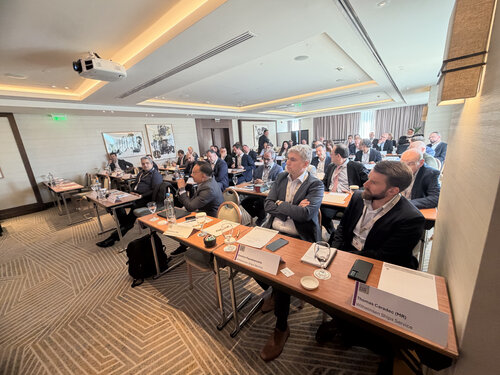
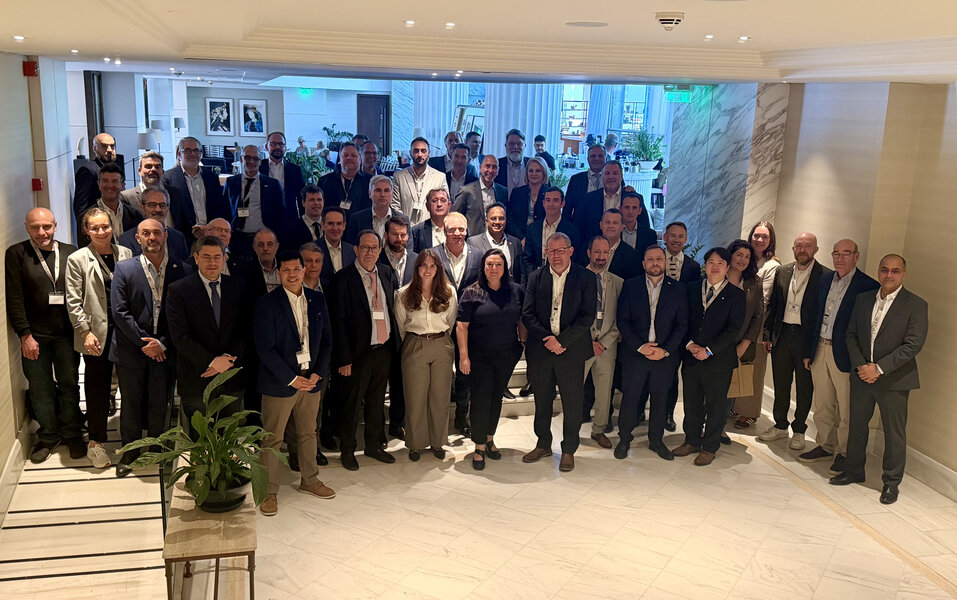
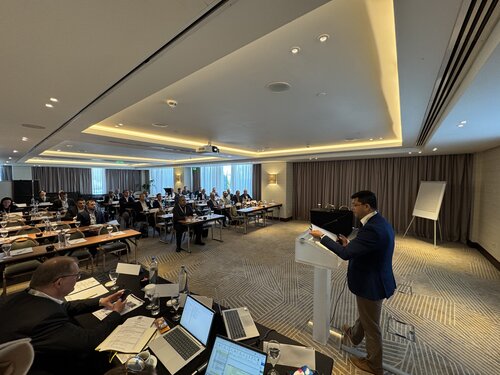
Over 60 delegates met in Athens in May for the first members meeting of 2026, and the biggest CSSF members meeting to date.

Performance data: progress alongside new warning signals

Søren opened proceedings with a management board report confirming continued membership growth — CSSF now counts over 40 ordinary and associated members — and outlined the 2026 to 2030 strategy, which centres on two pillars: professionalising member services and networking, and strengthening the benchmarking and Key Performance Indicators (KPI) framework.

Swapnodeep (Swapan) Mondal, Group Managing Director, Operations and Shared Services, Anglo-Eastern Ship Management and second chairman of the CSSF management board presented the 2025 CSSF Performance Report. The data told a mixed story. "There are indicators showing significant change in 2025 that warrant closer attention. Navigational incident frequency and fire frequency have both increased for the third consecutive year, and PSC inspection quality indicators have weakened," said Swapan and added, "At the same time, 2025 confirms sustained improvement in LTIF (Lost Time Injury Frequency) and TRCF (Total Recordable Cases Frequency), and fewer detentions overall. This combination — improving lagging indicators but weakening leading signals — is exactly why KPI relevance and structure matter." Christian Lederer, Head of QHSE, Peter Döhle Schiffahrts-KG followed with recommendations from the CSSF Working Group on KPI revision.

The revision work builds on decisions taken at the Hong Kong members meeting in November 2025, where a working group was mandated to review the KPI framework and present a proposal for vote in Athens. The group combined a review of current indicators, definitions and reporting practice with a membership survey and iterative discussions, assessing each KPI against its relevance, reporting workload and feasibility.

The survey delivered an encouraging picture. Members rate all KPIs as high to very high value on average, with KPIs related to Port State Control, Personal Accidents and Fires among the most valued indicators, while qualitative feedback pointed to a desire to streamline reporting, clarify definitions and make better use of the reported data. The working group’s recommendations reflect that balance: the large majority of indicators are retained, a small number of high-burden, low-yield items are removed, and critical definitions such as Exposure Hours and Groundings are sharpened to improve consistency and comparability across the membership.

The session generated a lot of good discussion and input and concluded with a vote to continue the Working Group’s efforts. Building on the valuable feedback received from members, the group will further refine the proposed KPI framework with the objective of establishing a meaningful and practical set of indicators. These KPIs will support members in measuring performance consistently and provide a solid basis for effective benchmarking across the CSSF membership in the future,” said Christian.

Simplifying safety: CMA CGM's Rules for Life

Vincent Coquelet, QSSE Manager, CMA CGM began the open session with a presentation on the company's critical risks safety campaign. Starting from a clear-eyed assessment of the risks that cause the most harm, CMA CGM developed a set of "Rules for Life" which are straightforward, practical guidelines shared with crew worldwide. The approach is deliberately simple: rather than relying on complex procedures, the rules give seafarers clear actions to take against the critical risks most likely to result in fatalities or serious injury. Early results have been positive, with crews adopting the guidelines and the approach generating strong engagement at vessel level.

AI adoption, navigation safety and routing optimisation

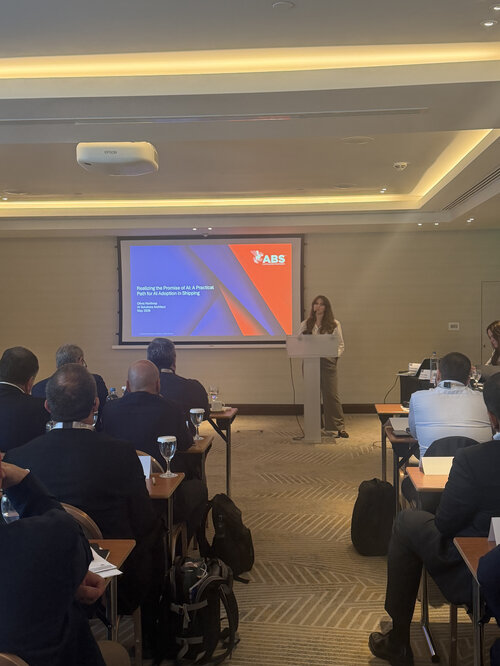
Olivia Northrop, AI Solutions Architect, ABS addressed the growing role of AI in container shipping safety. “The sector is well placed to benefit, particularly in safety management, documentation workflows and operational decision support,” she said, outlining a structured approach to adoption: identifying high-value use cases, aligning with regulatory frameworks and building internal capability. Practical applications highlighted included converting unstructured reports into searchable data, accelerating reviews of technical and safety documentation, and providing faster access to trusted operational knowledge.

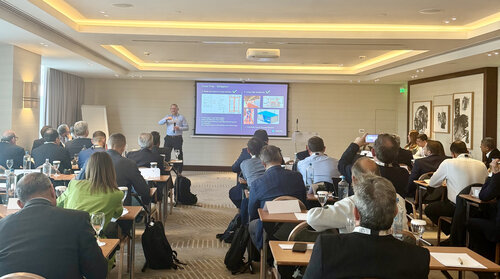
Alfred Gomez, Director Marine Standards, Seaspan Ship Management presented the company's initiatives in navigation safety, with a particular focus on the master-pilot relationship. “Many marine casualty investigations have identified shortcomings in bridge resource management, where inadequate cooperation between the master, pilot and bridge team have contributed to groundings, collisions, or near misses,” said Alfred before outlining several steps that could be taken to improve safety, including thorough master-pilot information exchanges before commencing pilotage, active monitoring of the vessel’s position and pilot actions by the bridge team. He also emphasised the importance of a culture that encourages questioning and cross-checking regardless of rank or experience. 

Nikos Mazarakis, Solutions Sales Manager, StormGeo and Professor of Marine Meteorology addressed weather routing optimisation, using real-world examples to illustrate how modern weather routing systems can be integrated into both shipboard and fleet-level decision-making. "The goal is to promote a balanced approach where technology and experience combine to improve safety, reduce risk, and enhance voyage performance," said Nikos, stressing that digital tools should support rather than replace sound maritime judgment.

Cargo fires: prevention, detection and response

Cargo fires dominated the second day, reflecting the forum's own data showing fire frequency continuing to rise for the third consecutive year. Ortwin Muhr, Head of Nautical Department, CPO Containerschiffreederei (GmbH & Co) KG reviewed training scenarios and equipment guidance for large-scale fire incidents, concluding with a direct call on the IMO and classification societies to invest in research improving existing rules. Søren Thuen and Enrico Pangoni, Fleet IoT Solutions Lead at Maersk covered prevention and mitigation, including new work on heat-based early detection. With lithium battery fires increasing sharply, Maersk has revisited its catalogue of measures and is incorporating design improvements above regulatory minimums in both new builds and retrofit projects.

Osher Perry, CEO of ShipIn Systems introduced continuous visual and thermal monitoring as a means of early cargo fire identification, arguing that fires develop gradually before escalation becomes unavoidable and that earlier detection gives crews a meaningful window to act. Elias Psyllos, Vice President, T&T Salvage put the challenge in stark terms: locating a fire on a large container ship can be "almost impossible" given the thousands of boxes involved. "As reported by the International Group of P&I Clubs that use their own datasets and scope, with fires happening around every ten days on an industry-wide level, fire containment and crew training are paramount," said Elias, noting that standard seafarer training falls well short of professional marine firefighter capability. Alfred Gomez closed with Seaspan's fire prevention initiatives. 

Taken together, the fire sessions delivered an unambiguous collective message. With detection, containment and crew training all struggling to keep pace with the lithium-ion threat, the industry cannot afford to treat cargo fires as occasional misfortune. The recurring call to action was that prevention at the booking stage, earlier detection at sea, and better-equipped, better-trained crews must advance in parallel – and that no single operator can solve the problem alone.

Geopolitical risk: a live case study

Swapan returned to the floor for one of the meeting's most commercially resonant sessions, addressing the evolving geopolitical and security risk landscape. In addition to covering key developments across trade routes, port operations and vessel safety, he emphasised the importance of risk preparedness in connection with the ongoing disruption in the Strait of Hormuz. Setting out the wider context, he described a scenario of severe energy-market dislocation: Gulf oil exports sharply curtailed, the Ras Laffan LNG facility — accounting for around 17% of global LNG — facing weeks of repair, and tankers repositioning to alternative trades on timelines stretching to 90 days. The point for container operators, he stressed, is that the knock-on effects reach far beyond the tanker sector: bunker price volatility, port congestion at alternative routing endpoints, recession-driven demand destruction and insurance costs passed through to every trade.

Expanding on the implications for CSSF members, Swapan distinguished three levels of response. Operationally, route planning must assume both chokepoints could be closed for months, with bunker strategy under extreme volatility and heightened GNSS interference preparedness, particularly near Fujairah and the Red Sea. At boardroom level, the strategic exposure is significant: war risk premiums can move from 0.2% to 0.5% within days, accumulation risk compounds rapidly if multiple vessels are trapped, and sanctions compliance in one jurisdiction can create risk in another. He urged members to engage hull and machinery and P&I clubs early, noting that terms were changing weekly. For crews, the message was equally direct — welfare directly affects retention and recruitment, and seafarers increasingly choose employers based on how they respond in a crisis.

On planning horizons, his guidance was to prepare for months, not weeks. Realistic timelines pointed to little change in the near term, a best-case partial reopening only after a ceasefire, and meaningful commercial transit resumption potentially three to six months out. He closed with a call for collective action: as individual operators, investing in security infrastructure and ensuring risk intelligence reaches decision-makers in hours rather than days; and as a forum, sharing best practices on crew welfare during prolonged stranding, coordinating with bodies such as INTERTANKO, INTERCARGO and ICS on transit guidance, and advocating to flag states and the IMO for seafarer protection. “A collective voice carries more weight,” was the underlying message — and a clear statement of where the CSSF can add value beyond any single company's reach.

Turning to the subject of mooring, Thomas Caradec, Product Management, Planning Director of Mooring Solutions at Wilhelmsen Ships Service highlighted inconsistent certification practices and misleading claims in the mooring industry, arguing that as safer rope designs emerge, independent verification and rigorous standards are essential to protect vessel owners, ports and crews. 

Apo Belokas, CEO of Risk4Sea presented PSC trend analysis and crew welfare insights. On the inspection side, he argued that the industry is still reacting rather than managing: PSC performance is typically measured after the event, and traditional indicators provide visibility but little foresight. His proposed answer is a monthly PSC Stress Index for the container segment, which converts existing KPIs into a single forward-looking signal that tracks deviation from normal conditions and flags early deterioration before incidents and detentions occur — a shift, in his words, from reactive compliance to predictive control.

Turning to crew welfare, Apo shared findings from the 2025 SEAFIT survey, which gathered anonymous feedback from 21,775 seafarers across 1,703 ships. The overall wellness index eased to 70.1% from 72.5% in 2024, with communication — above all better internet access on board — remaining seafarers’ top priority, shore leave satisfaction falling below 50%, and support for mental wellbeing flagged as an area needing greater attention. He encouraged members to promote participation in the 2026 edition, which is free to join and provides the industry’s largest dataset on crew welfare.

Paul van’t Hof, Operations Manager, Smit Salvage addressed crew exposure to toxic gases. “As container fires continue with increasingly severe consequences, leading salvage companies like Smit can help reduce crew exposure to fires and toxic gases by providing rapid specialist response, advanced fire and gas monitoring, hazardous-material expertise, enhanced PPE, and crew-focused emergency planning and training. This allows crews to be removed from high-risk environments sooner while improving the effectiveness of incident response,” pointed out Paul.  
Voices from Athens

Participants shared their reflections on the value of the meeting. "The CSSF members meetings are important events in our calendar," said Jitender Sood, Operations/SQ, Eastern Pacific Shipping. "We are like-minded people driven to improve container ship safety standards from an operator-led perspective."

"Ship operators are seeking solutions to make operations safer. This is where the CSSF forum comes into focus, offering peer exchange on all matters relevant to safety — and this helps us to make better decisions at a time when the industry faces many challenges," said Alfred Gomez, Director Marine Standards, Seaspan Ship Management.

"The container industry is facing new risks and challenges. Those who demonstrate proactive risk and safety management and employ industry best practices will benefit from greater trust amongst stakeholders," noted Olivier Texier, QSSE Deputy Vice President and DPA Co-ordinator, CMA CGM. 

Y.S. Hwang, Head of Operations, Evergreen Marine Corp, one of the forum's newest members, captured the mood of the meeting: "The practical focus on real operational experience is valued by the members, also when it concerns addressing the challenge of modern container cargo fires. This requires collective awareness and joint action, and that is exactly what this forum provides."

The Athens meeting underlined both the progress the CSSF has made and the scale of the task ahead. With fire frequency rising sharply and new technologies demanding new competencies, the forum's model of operator-led peer exchange looks as relevant today as ever and is well positioned to meet the challenges ahead.

Over 60 delegates drawn from global shipping gathered in Athens recently for the Container Ship Safety Forum's biggest meeting to date, with cargo fires, risk management and crew wellbeing all high on the agenda.

Container shipping's most pressing safety challenges were at the centre of debate at the Container Ship Safety Forum's (CSSF) Athens Members Meeting — its first meeting this year and the largest in the forum's 12-year history. More than 60 participants, including leading container operators, ship managers and associated members, gathered for two days of presentations, working group discussions and structured networking. The programme spanned cargo fire prevention and response, navigation safety, security and geopolitical risk, AI adoption onboard, mooring certification and Port State Control (PSC) performance trends.

"In-depth sessions on safety matters are of great interest and value to our members. They help us not only address known risks but also identify emerging ones" said Søren Thuen, DPA & Head of Safety, Maersk and first chairman of the CSSF management board. "Our focus remains on safety at the front line — sharing real operational experience and cases that demonstrate how preparedness, training and transparency can make a critical difference."